
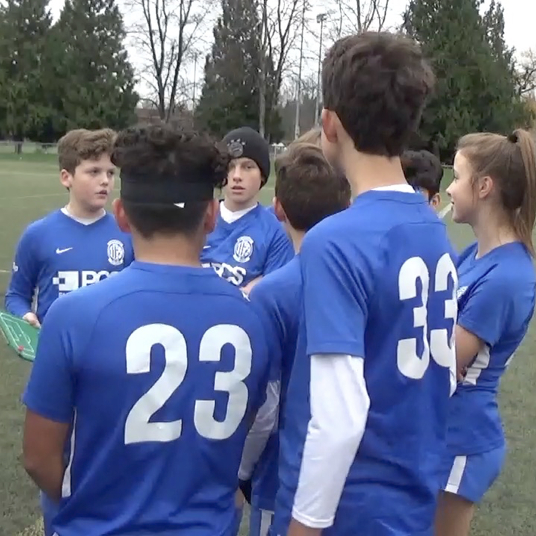
As I coach I feel it is my responsibility to facilitate an environment for players to continue to think and learn, and to provide a variety of learning strategies to do this. So I decided to put my players at the heart of what they like the most, the game on Saturday. For this I wanted to ensure they owned the process, worked together and discussed and reflected through the activity.
Coaching my boys under 14 soccer team I decided to head in this new direction for this week. We were set to play a State Champion team on Saturday, a team we have played several times, but lost 1-3 in our most recent meeting in September. We played well that day and dominated in that match, but they were clinical and were able to get the better of us on the score line. I thought that day that there was great future in the performance by us.
This week I decided to hand over the game to the players. They would choose the team, they would choose the tactics, and they would do any coaching at half time or during the game. I wasn’t sure how this would go.
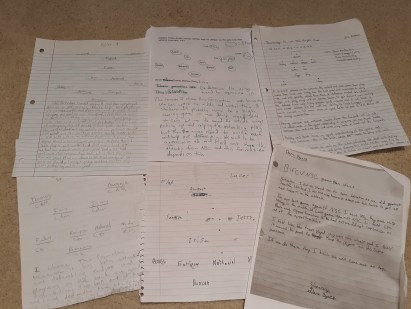
First up the players brought in their written thoughts about our team formation for the game. I sent them away with these so they had to think and provide more detailed information to indicate who, where and why. Some great feedback came back to show an excellent level of thought process. The next stage though was the most interesting as during the week we set time aside at practice so they could discuss this further. This brought out negotiation problems that is a lot harder to navigate with 15 voices. They had to come to some agreement between them, and that was a fascinating discussion.
Come the game on Saturday the team led everything. The warm up was ok, though maybe a little more relaxed than I would have liked, but I stood quietly and observed. “Did they need more’, ‘will they be ready’, ‘are their minds focused and ready for the challenge’ or ‘are they physically ready for a challenging game’. All these questions went through my head, but I did not ask the questions, did not check-in with players, did not give pre-game reminders, and let the events unfold. I’l not lie, it was not easy.
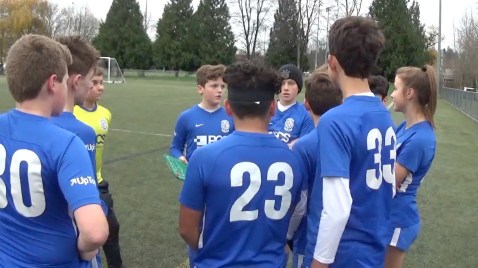
The team got together to prepare for game time and re-affirmed the starting line-up. The players starting on the bench were to choose what position and when they would enter the game.
Our assistant coach and myself kept stats and time keeping, but did not coach.
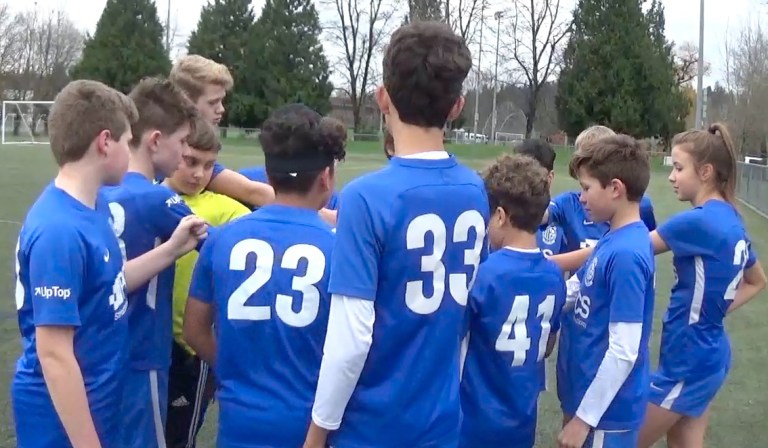
We did ask players on the bench to make notes of what they saw happening on the field, good and bad, so they had things to refer to for the half time team talk. We went behind 0-1 due to a mistake in our own third as we tried to build out, and our quality opponents punished us for it. The game ebbed and flowed, but there was not a great deal between the teams. I thought we were a little too open in midfield, but were causing a good threat in the attacking third that showed promising signs for potential goals for us.
At half time I did not give them instructions, but I did provide them with one piece of identification that I thought could lead them to problem solve the game. I directed them towards the simple principles of attacking/defending:
Are we trying to play over, around or through our opponents?
Are our opponents having success being able to play over, around or through our team?
These two thought provokers opened up the quick debate of how the team planned to adapt the 2nd half plan to continue and improve our attacking potential, but also to be able to shut down or reduce the success that our opponent were having. There was a super team inclusion to this conversation, and meaningful observations that ensured that all players headed back out on the field with a clear plan A, but also a back up
plan B if the 0-1 deficit was not turned around mid-way into the 2nd half.
I was really pleased that there was a strong team unity that held through all these conversations, but more pleasing was that our team identity of playing was not set aside, but reaffirmed with a greater conviction for a higher intensity in the 2nd half.
In the 2nd half our team was totally dominant. The team started to win midfield with the new 4-2-2-2 formation, but also with the tactical nous and understanding of the wide forwards and false 9 which enabled them to be progressive offensively. Our team equalized from one of several strong attacks down the left flank, and went on to find a winner as our false 9 drove at their back line, who did not know how to deal with the problems that we were bringing to them in the game.
On reflection I was so impressed how the team fought and thought their way through to success, how they brought an intensity to bring into action what they wanted to do, but most of all I was delighted in their game understanding of what was going well, and what they needed to address in the tactical balance of the game.
Our BIFC team went away with the 3 points and their best win of the season. Not sure how I can take the coaching reigns back now, but it was greatly beneficial for me to build trust with my team, build their confidence in their ability to problem solve and their willingness and eagerness to be ready to learn and adapt to something that was presented in a different way.
In the cycle of the players development this was a learning exercise that I will undoubtedly repeat, whether I will be able to impart enough detail to bring it to a greater number of our club coaches I am not sure, but I will certainly be recommending the process. I felt that the players needed to be this age, 13-14 or older, to give them the amount of freedom I did, but I do feel that you can do this with younger players if the coach kept a little of the control. It will be an interesting experiment.
 The Travel Completist